Showing posts with label DFI. Show all posts

Friday, 8 May 2020

Digital Fluency Intensive Program Week 9

                                                                Agenda: Revision                        Friday, 8th May 2020


Ubiquitous learning can be defined as an everyday learning environment that is supported by mobile and embedded computers and wireless networks in our everyday life . It is aimed to provide learners with content and interaction anytime and anywhere .The learning process includes the real-life experience augmented with virtual information and is adapted to the learner and learner’s environment. 

The content objects, activities, and the interaction with the system and with other humans (including instructors and peers) are customised according to learner’s current goals of learning, interests and preferences, cognitive characteristics, history and current state of competency in the subject matter in hand, the characteristics and demands of the location, the technology being used as the medium and facilitator for learning, and the context of the situation in which the learning is taking place.


DFI, on the whole, has been an amazing experience for me. I came into it with a reasonable degree of digital fluency, but I have still learnt a lot from the experience and I walk away in a much better place in terms of my digital skill. Digital learning is replacing traditional educational methods more and more each day. With how rapidly classrooms are changing, it is best to forget methods you may remember from when you were in school and start thinking about newer teaching and learning techniques based on digital learning tools and technologies. The inclusion of digital learning in the classrooms can vary from simply using tablets instead of paper to using elaborate software programs and equipment as opposed to the simple pen.


It has been great to learn about Manaiakalani over the course of the DFI, and I am very much looking forward to what the future holds!


In 2020, the Ministry of Education expects that schools will be using the revised learning area to provide students with even broader opportunities to learn in and about technology, informed by the new content around computational thinking and designing and developing digital outcomes.


"Design and plan culturally responsive, evidence-based approaches which reflect the local community and Te Tiriti o Waitangi partnership in New Zealand."



Friday, 24 April 2020

Week 7 Digital Fluency Influence Program DFI

 24 April 2020                                               AGENDA: DEVICES


This day focuses on the devices our young people use and we will experience Learn Create Share using Chrome books and iPads. Today we heard Fiona share her competence on all things Cybersmart. She explained very beautifully about Cybersmart learners. What are smart learners, who
  • Understand and demonstrate responsible use of their device as described in the Kawa of Care Responsible Use Student Agreement
  • Confidently navigate and harness their device and learning applications 
  • Are mindful that being Cybersmart is staying up-to-date with our Cybersmart learning. 
To make the most of their Chromebook or iPad and Google Apps, Smart Learners follow the Kawa of Care and learn to use their device confidently and in clever ways to Learn Create Share. While each Cybersmart category has specific learning outcomes, how teachers engage learners  will be in response to the school community and interests of their learners. To empower learners it is critical that learning sites are visible and accessible and that learners are able to confidently navigate the site to access learning. Smart Learners' always know how to interact with others online and make smart decisions about what information has shared. 
They maintain positive and supportive online relationships and can make smart decisions about how and who they interact with online. Moreover, they understand what to do when something doesn’t seem right. And know what to do when things go wrong.


Gerhard's session on Chromebooks was really interesting. He explained how to use Chromebook simulator.How to Use the Chromebook Simulator. For example, to get started using the Chromebook simulator, fire up your browser, and head to the simulator’s homepage. From here, you can use the panel on the left to browse through the categories for a guide or click on one of the “Popular Topics” at the bottom of the page. You can even use the search bar to find what you want from the topics covered.


Choose a topic to start the simulation with the pane on the left, the popular topics at the bottom, or the search bar at the top of the page.


Our next session was on Screen Castify, and it was fabulous. Maria explained what is screen castify and how to use it. Screencastify is a Chrome extension used by people to easily record, edit, and share videos. It is especially popular with teachers who make screencasts and webcam recordings to share with students. Link how to use screen castify.


Screencastify Review for Teachers | Common Sense Education

"Select teaching approaches, resources, and learning and assessment activities based on a thorough knowledge of curriculum content, pedagogy, progressions in learning and the learners."

"Gather, analyse and use appropriate assessment information, identifying progress and needs of learners to design clear next steps in learning and to identify additional supports or adaptations that may be required."

Friday, 3 April 2020

Week 5 Digital Fluency Intensive Program (DFI)


    April 3, 2020                        AGENDA: Collaborate Sites


Today's session starts with a bit of different feel as all teachers and facilitators join via Google Hangouts. It is a perfect example of modern technology, as without leaving home, we met up with other people and share our screens and experience digitally.

Technology is not a barrier today, and it is a footstep for us to create something new and adventurous to make life beautiful. Moreover, it is an excellent practice for us when COVID-19 has affects our ability to meet as a group.

Session starts with Connecting with each other. After ‘Karakia’ we connect with a great group of educators via ‘Gratitude Chain.’ It was awesome. I really enjoyed, and learning about the views and thoughts of other educators.

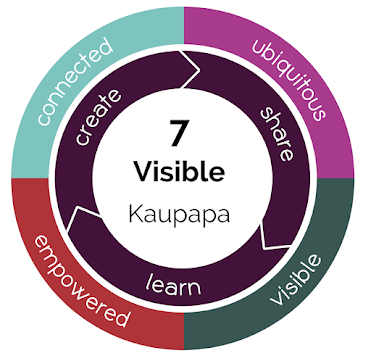
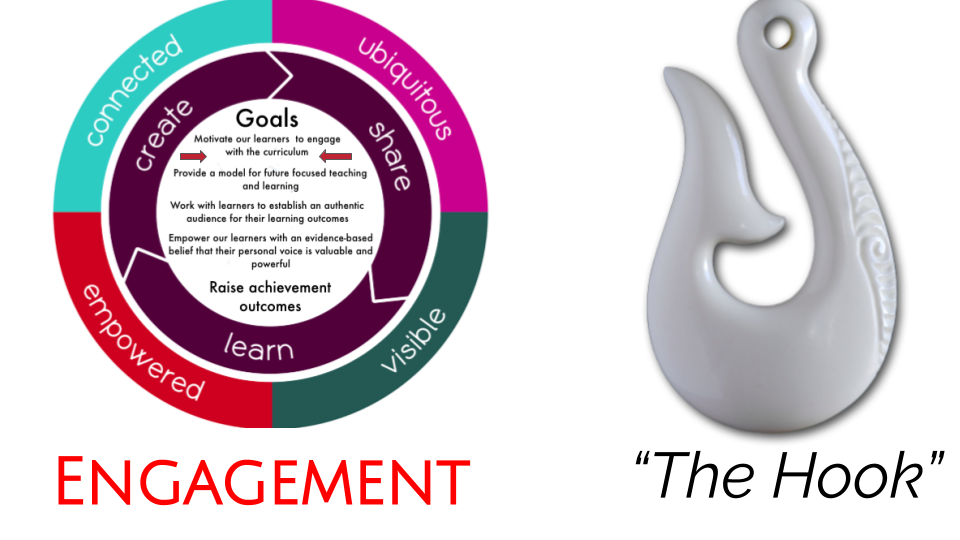
I really like Dorothy's presentation on Pedagogy and Kaupapa (Visibility in Teaching). How visibility is important in teaching and learning.


Hapara Teacher Dashboard specifically designed for Manaiakalani teaching learning program. The purpose of this learning should be visible to your teachers. It is useful for the teachers to know what their students are doing in learning and how they are going.

Together, we have developed the  'Learn, Create, Share' pedagogy, designed to accelerate the acquisition of core subjects whilst bringing the joy back into learning and teaching. Manaiakalani-Google Class On Air, is one way we have chosen to share our learning with you.


Next session was Deep Dive -  with Kerry She discussed the word ‘Multi Modal’ - what we mean when we use this term. This is an inclusive, differentiated approach to teaching in a digital learning environment. Accelerating progress and outcomes for our young people for many involves firstly engaging them behaviourally- on task - bring in the right place, at the right time , doing the right thing.


We also examined the terms multi-modal and multi textual as part of T shaped literacy and challenged to consider how we can engage our learners so that they begin to take responsibility for their learning.

By personalising education, we are empowering learners to become confident, responsible and competent.

As term 2 approaches we need to consider how we can utilise google sites, Hapara, Google hangouts and different media to engage our learners, particularly as some of them will not have the same adult support usually available to them during this lockdown.


In an effective classroom, students should not only know what they are doing, they should also know why and how.

― Harry Wong


Friday, 27 March 2020

Week 4 Digital Fluency Intensive Program (DFI)

 March 27, 2020                                     AGENDA: DEALING WITH DATA


Our session today starts with a new journey and an original learning path where we experienced distance learning and group meeting via Google Meet. It was fascinating to communicate with all other teachers online and share our learning experience and activities. 


Next session was on google forms. GO to forms.google.com and create any forms for students, parents and teachers. Then, we talked about  google maps. Customisable collaborative maps are allowing you to track or plan journeys, measure distances and place markers. It has many possible uses in the classroom; the opportunities to use My Maps with learners are plentiful. 


How to Embed a Google Form (The Easy Way) | Kali Forms


Next session was setting up Spreadsheets. I learned how to make sheets and how to use different formulas. And how to freeze rows and columns by clicking on the view on the task bar. We also learned about Biodata(at the end of the sheet). We can use spreadsheets for our results and can quickly sort the students and their grades. This session was a rapid demonstration of some features of sheets that are useful for school.

BLOGGING TIPS AND LABELS
Blogs need labels.  As a teacher, it is evidence of my practice that complies with the criteria of being a registered.  It's a quick way to search for a topic that could be useful to share with peers, students and whanau. šŸ˜€


    The important thing is not so much that every child should be taught, as every child should be given the wish to learn.”—JOHN LUBBOCK

Friday, 6 March 2020

Week 1 Digital Fluency Intensive Program (DFI)


O6/03/2020  AGENDA: CORE BUSINESS

Hi, my name is Palvi Sharma. I am Science, and Biology teacher at Tamaki College, Auckland.  The college is proud to offer a wide range and variety of study courses and programmes for students Tertiary and Trade based education. The school has fully embraced technology, and it is a true blessing for me to be a part of this organisation.

School connects with Manaiakalani Education, which is suitable for teachers' and learners' harmonious development. Today was my first day at Manaiakalani Digital Fluency Intensive Programme (DFI). 

Manaiakalani is a group or cluster of 13 schools in the Tāmaki Community, Auckland, New Zealand. This is the home of NZ's oldest government housing community and is occupied mostly by NZ Māori and people from the Pacific Island nations. This community has partnered with their schools, the Manaiakalani Education Trust, Google & other providers to seek improved education outcomes.

It was great to hear about the backstory of Manaiakalani. It is excellent, sturdy and liberating. I am inspired by the usage of technology in the education sector. I am very impressed by the ways we can use technology and digital presentation for students in the classroom. Today, I also learned how we could connect technology in different ways with the learners.


Today, I created my docs in google drive and also make links for them. I also learned about blogs, how to create professional blog and classroom blog. It is my first blog which I learned and prepared during my session.

I am enjoying this course. Before this course, I didn't know how beautiful and exciting it is technology. I will use this technology in my classroom. My students will love it. I am very excited to use these different techniques in my class.

I hope I will learn a lot each week and help other educators in my school.

Thank you.


Mental Health Awareness Week(27 Sep-3 Oct)

  Mental Health Awareness Week (MHAW) runs from 27 September to 3 October and this year’s theme is Take time to kōrero/mā te kōrero, ka ora....