Wednesday, 3 February 2021

House System within school helps students gain a sense of belonging

 The House System provides a structure within the College that promotes belonging and continuity among College families and staff allowing students to be known more closely and thus cared for more effectively. Loyalty and commitment to a particular group are fostered over time. The House Model offers many strengths and benefits including a culture of students understanding and caring for each other across the whole College. Building a sense of belonging and community within a House Group, fostering positive relationships. 

 Building the leadership capacity of all senior students as they take increasing responsibility as leaders within their house and mentoring of middle school students during the Learning Matters Program. Provide leadership roles for students including House Captains, House Leaders. House Group Leaders getting to know the students in their tutor group over their six years at the college and assisting to personalise their learning and aspirations through formalised target and goal setting. 

Encouraging participation in the co-curricular activities provided within the College between houses developing in student's habits such as neatness, faithfulness to homework, wearing of uniform and punctuality. The same principle applies to identification and addressing student problems early, rather than allowing them to develop.

The House system was first established at Tamaki College in 1958.  The Houses were named Gold, Blue, Red and Green, with a Male and Female House Captain and a Male and Female Deputy House Captain for each house. The Houses/Whanau were reintroduced/renamed in 1988 as Kowhai, Puriri, Rata and Totara. During the 1990s there were student Whanau leaders (i.e. House Captains) and staff. Whanau leaders (i.e. Whanau Deans). House Captains were reintroduced in our Golden Jubilee year, to open up student leadership opportunities. he system in how our students are grouped has gone from year level groups to house groups. Our students will be grouped into house groups. The house groups are Kowhai, Puriri,  Rata, Totara.


Friday, 29 January 2021

Supporting Pacific Learners(Reflection)

 Culturally responsive strategies to meet the needs of Pacific learners who require additional support.


                     What is Pasifika or Pasifika peoples?

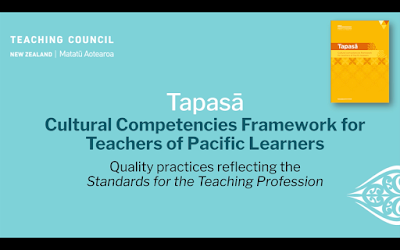
They are umbrella terms to categorise trans-culturally diverse peoples from the Pacific region who now live in New Zealand but continue to have family and cultural connections to Pacific Island nations.  Pasifika identifies themselves with the islands and cultures of Samoa, Tonga, Cook Islands, Fiji, Niue, Tokelau, Tuvalu and other Pasifika heritages. (Tapasā).


Who are our Pasifika learners? They are trans-culturally diverse individuals. They live or try to live in two different cultures. They are Tongans or Samoans and Kiwis at the same time consequently, learners live their traditional cultures at home and their Kiwis culture at school.
They are ethnic-specific individuals. Samoan, Tongan, Cook Islands, Fijian, Niuean, Tokelauan, Tuvaluan learners are all Pasifika but they are very different because of their different ethnicities and cultural capital. They have multiple identities
“I’m Tongan, yep, but I’m also Kiwi”

 TAMAKI  College PASIFIKA LANGA  Ako Initiative:  Understand the background of our Pasifika learners and their learning. Revisit the Langa Ako initiative by sharing our work so far and the seeing pathway moving forward. Unpack the Teaching Standards for Professional Teaching through the Tapasā lense. Key areas Langa Ako will focus on to develop and enhance Pasifika culture, languages and identity in the school.

 Key Objectives: Infuse culture in the school by providing dedicated learning sessions that embrace Pasifika culture, language and identity. Provide opportunities to engage with our community. Provide staff and students focused PLD and lessons that contextualise learning content and teaching pedagogies to support Pasifika learners. Engage parents by providing ethnic parent groups that pro-actively walk alongside their child’s learning journey.


Monday, 7 December 2020

Junior Prize giving (Reflection)

 7 December 2020


Celebrating our progress, our success, our diversity, culture, traditions, rituals, and who we are is very much a part of our culture. All around New Zealand prizegiving is coming up to recognise and celebrate students who have worked hard and achieved highly. Prizegiving is our most prestigious event. It is held in the College auditorium to accommodate all our parents, students and guests. During the prizegiving, we acknowledge students, parents and teachers for their successes.

I believe that awards inspire students to work to their highest potential. Giving out an award to students who have achieved something is a way to make students feel like they can achieve something if they work hard. This helps young people to learn early on that their actions can have an effect on how they will do in life and that the harder they work the more they will achieve.

Monday, 16 November 2020

Diwali Celebration in Tamaki College(Reflection)

 Diwali is a special time of celebration for New Zealand’s Indian community and this year, like so many before, will be celebrated in the homes of families everywhere as they share food, give gifts and light candles or diyas to commemorate the return of Lord Rama, his wife and brother from their 14-year exile (after the defeat of the 10-headed demon-king Ravana).

Diwali signifies the triumph of light over darkness, good over evil and the renewal of life; it is a beautiful time to celebrate with your nearest and dearest.

After an extraordinary year of disruption and uncertainty that has been so challenging, the region-wide celebrations of Diwali - The Festival of Lights lit up Auckland’s vibrant communities on 14 November 2020. As the Diya (candle) is passed on, the light is shared,  bringing our communities together. 

Diwali is a great opportunity to engage with your local Indian Hindu community, especially those members who are families at school. Extend your school Diwali celebrations into the community, by encouraging family input into all aspects of teaching, and learning. It is from families that you will get insights into valuable stories, artefacts, language, and customs.

This year, we celebrated Diwali at Tamaki college, and I was celebrating this festival first time with Tamaki college Whanau. I was very excited and curious about these festivals. All Indian community teachers want to represent their culture with their best. So they started making arrangement one week before. We planned how we will do this festival and involve Tamaki whanau at this festival. One day before we decorated the staff room with traditional decorations and with diyas. And we encouraged whanau to get ready with traditional Indian attires on the day of the festivals. We prepared yummy Indian food for our whanau. They really liked it. 

It was just a way to represent cultural diversity and respect for all culture, traditions and rituals in Tamaki college.


Wednesday, 11 November 2020

Flying Rockets(with Mr. Dunn)

 In this week, we have planned to prepare rockets. For this, Firstly, Mr Dunn instructs students about how to make rockets. What things we will use to make our rockets, what precautions we will take while making our rockets. It took 10 mins after that, everyone started making their rockets. We helped students in their rockets and checked their rockets is it properly fixed.  After making rockets, we went to the school ground to fly rockets. And successfully, students launched their rockets with the help of Mr Dunn.


Friday, 6 November 2020

Rocket Science with Mr. Dunn(STEAM)

 This week was a very special and exciting week for me as well as intermediate students. This time we are going to make and fly rockets. Students were very excited to make their own rockets. They have a lot of questions about rocket science. This session was very extraordinary just because of Mr Dunn, who was the in-charge of rocket science. Mr Dunn is deputy principal of Tamaki college and a very good chemistry teacher. He loves science and technology. So, this time intermediates were working with Mr Dunn.


Rocket Science session divided into two parts. In the first session, students discussed rocket and forces acts on rockets. Students also discussed gravity and planets. They got all their answers while discussing rockets. This time we planned to make paper rockets as a demo. This was a very exciting activity. In this way, students came to know about drag force and the number of fins. And how they act on a flying rocket.

For this activity we need, Pencil Scissors Tape Soda straw (plastic or reusable) Meter stick or measuring tape Rocket template and data log.

1. Cut out and shape the rocket body. Cut out the rectangle. This will be the body tube of the rocket. Wrap the rectangle around a pencil length-wise and tape the rectangle so that it forms a tube.

 2. Cut out the two fin units. Align the bottom of the rectangle that extends between the fins with the end of the rocket body, and tape the fin to the body tube. Do the same thing for the other fin on the opposite side, making a “fin sandwich.” 

3. Bend the fins on each fin unit 90 degrees so that they are each at a right angle to each other. When you look along the back of the rocket, the fins should form a “+” mark.

 4. Twist the top of the body tube into a nose cone around the sharpened end of your pencil. Measure your nose cone from its base to its tip and record the length on the data log and on the rocket itself. 

5. Prepare to launch! Remove the pencil and replace it with a soda straw. Be sure your launch area is clear of people and hazards. Then, blow into the straw to launch your rocket! Record the distance the rocket travels on your data log.


Tuesday, 3 November 2020

How to deal with EXAMS stress?


The pressure of high school exams is one of the first pressures in life that teaches you the values of dedication and commitment. Exam stress affects most students in varying ways. It is important to manage this stress and find little ways of helping to eliminate the risk of burnout. 

For some students, exams can be a breeze; revision is second nature to them, and they could ace an exam with their eyes closed. But for others, sweaty palms and heart palpitations are just a part of the territory, and it seems that nothing is more impossible than sitting down and revising. Here are some handy tips that can help to dissipate stress and make sure you can get through exam season. 

If the stress gets to a point where it is overwhelming and is affecting your day-to-day life, try and speak to someone about it. School should have a service where you can speak to people about your concerns and will be able to offer more advice on how to manage it. If that seems like too big a step, open up to a family member or a friend about the pressure you feel. You’ll be amazed to know that you aren’t alone in feeling like this.

Be flexible. While having a revision time table is one of the best tools in your arsenal for exam success, don’t be too hard on yourself if you don’t stick to it. If you accidentally oversleep, don’t write the day off.

Write down everything you feel like you need to do and try and tick one thing off. Just the act of feeling like you are in control of your revision can help. 

Research shows that overuse of mobile phones not only causes stress but can also hurt your mental health.  So it’s time to get smart about your smartphone. Here are a few things you could try: Check your social media feeds just once or twice a day. Turn off all notifications. Put your phone on airplane mode, or better still, switch it off after 9pm.


"In times of stress, the best thing we can do for each other is to listen with our ears and our hearts and to be assured that our questions are just as important as our answers.”


Mental Health Awareness Week(27 Sep-3 Oct)

  Mental Health Awareness Week (MHAW) runs from 27 September to 3 October and this year’s theme is Take time to kōrero/mā te kōrero, ka ora....